Nettles, despite their sting, are a bit of a wonder-plant. Not only are they great for pollinators and soil health alike, they also have any number of uses for us humans. They are a superfood that can be cooked and eaten just like spinach, or brewed into tea. They can be used to make cordage, fabric and dye, attract beneficial insects like ladybirds to our gardens, and work as accelerators in our compost heaps.
The stinging part of the plant are hollow hairs which cover the stem and leaves. Cooking or crushing the plant gets rid of them, and so this should always be done before eating (for pretty obvious reasons!). You’ll need to wear thick gloves when harvesting the nettles. I know some people are able to pick them by grasping them firmly and avoiding a sting that way. However as the plants grow very close together, you are just as likely to be stung by the leaves next to the ones you are picking, so I always opt for gloves.
Pick the top four or five leaves for your crisps, as the larger, older, leaves won’t be as tasty. This works as a general rule for any wild foraging you might do – young and fresh leaves always taste better.
Nettles and the other wildflowers in this article are a good starting place for foraging, as they are really common and hard to mistake for other plants (other than ones which are also edible). But you should never eat a plant if you are not completely sure of its identity. When foraging for edibles, also use common sense and avoid harvesting from areas where plants may be contaminated by things like pesticides and traffic fumes.
Never take more than you leave, and try not to disturb the roots of the plant or take parts you don’t need.
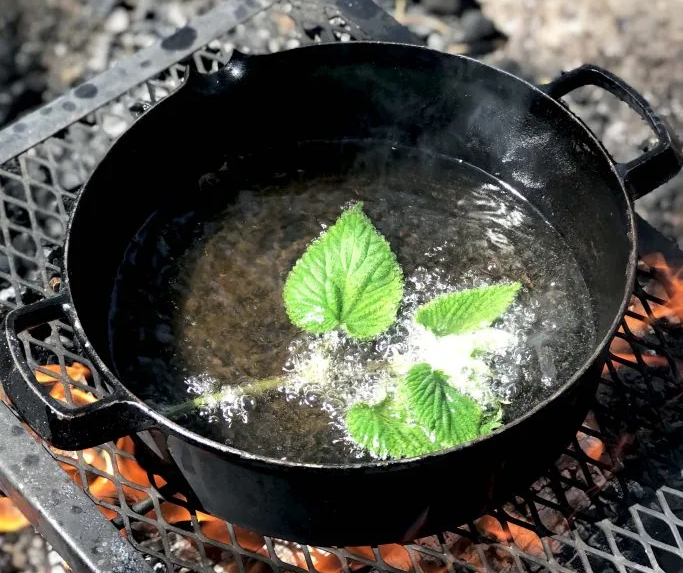
Stinging Nettle Crisps
Ingredients
Equipment
Method
- Harvest as many fresh nettles as you need. Just take the top 4 or 5 leaves from a plant – the newest leaves are always the tastiest for most plants.
- Wash them well in cold, salted water. This removes any creepy crawlies and bacteria.
- Heat the oil in the pan. Around one cm deep is plenty.
- Once the oil is hot enough to bubble and sizzle loudly when a leaf is added, you can start cooking.
- Add the stinging nettles a few at a time to the pan. It should only take a few seconds for them to cook. They will turn a more vibrant green and go crisp and brittle.
- Remove before they start to go brown. Put on a rack or some kitchen paper to drain and cool.
- Add salt, black pepper, chilli powder, or any other seasonings that you like. Enjoy!
All Campfire Recipes
Campfire Breakfast Recipes
Campfire Main Meal Recipes
Campfire Snack Recipes